

You rinse your glasses, run them through the dishwasher, and pull them out cloudy anyway. Then you notice the white crust creeping around the showerhead, and the towels that feel more like cardboard than cotton.
You’re not doing anything wrong. Chances are, your water is hard.
The benefits of a water softener show up in exactly these small, daily annoyances. Hard water carries dissolved minerals like calcium and magnesium, and those minerals follow the water through your whole house. They leave spots on dishes, a film on your skin, and scale buildup inside your pipes and appliances. A water softener removes minerals before they get that far. Here is what actually changes once they’re gone.
What Makes Water “Hard,” Anyway?
Hardness is simply a measure of how much calcium and magnesium your water picked up on its way to your tap. The U.S. Geological Survey measures it in grains per gallon (gpg) or milligrams per liter (mg/L), where 1 gpg equals 17.1 mg/L.
Here is how the scale breaks down:
- Soft: under 3.5 gpg
- Moderately hard: 3.5 to 7 gpg
- Hard: 7 to 10.5 gpg
- Very hard: above 10.5 gpg
Hard water isn’t considered a health risk. It’s a household problem, and a sneaky one, because the damage builds slowly.
Try the bottle test! Fill a clean bottle about one third full with tap water, add a few drops of liquid soap, and shake it hard. Lots of suds and clear water suggest soft water. Few suds and cloudy water suggest hard water. It’s a rough check, not a measurement. If you’d rather have a real number than a guess, a free water test will give you one.
In the Bathroom: Your Skin and Hair Will Notice First
Most people spot the difference in the shower. Hard water minerals react with soap and leave a thin film that doesn’t fully rinse away. That film can irritate skin, leaving it dry, tight, and itchy. On hair, it can make strands feel rough, dull, and even brittle.
Soft water rinses clean. Without the residue, skin feels more comfortable, and hair feels smoother. It’s a small change, but it’s often the one people mention first.
In the Kitchen and Laundry Room
Think about the spotty glasses from the opening. Hard water leaves mineral deposits behind as it dries, which is why glassware and silverware come out of the dishwasher looking cloudy. Soft water cuts down on soap scum and helps reduce water spots on glass, faucets, and shower doors, so cleaning takes less scrubbing.
Laundry follows the same pattern. Minerals can leave fabric feeling stiff and looking dull, and they can wear down fibers over time. Clothes washed in soft water tend to come out softer and brighter.
Because soap and detergent lather more easily in soft water, many households find they can use less of them. That includes laundry detergent, dish soap, shampoo, and cleaning products. It’s not a dramatic number on any single bottle, but it adds up over a year.
Soft water can also improve the taste of coffee, tea, and cooked food, since there’s less mineral content muddying the flavor.
The Hidden Benefit: Protecting Your Pipes and Appliances
This is the benefit you can’t see, and for many homeowners it matters most.
Every time hard water heats up, minerals come out of solution and form scale. That scale buildup collects inside water heaters, dishwashers, washing machines, coffee makers, and the pipes that connect them. A water softener prevents that buildup by removing the minerals before the water reaches any of those places.
We received a call that a customer had gone through 3 water heaters due to the corrosion and wear and tear associated with hard water. They knew hard water was an issue and were confident a water softener would remove their hardness and protect their water heater as well as other appliances and home investments! They now have a water softener, a new water heater (courtesy of HQ Water Solutions), and peace of mind.
How Does a Water Softener Work?
It’s simpler than it sounds. A water softener removes minerals through a process called ion exchange.
Hard water flows through a tank filled with tiny resin beads. The beads attract calcium and magnesium and swap them for sodium or potassium. The water leaving the tank is soft.
Eventually the beads fill up, so the system regenerates. It flushes the captured minerals down the drain and recharges the beads with salt. That’s why the salt tank needs refilling every so often. If hauling heavy bags isn’t your idea of a good time, salt delivery is an option.
Signs Your Home May Have Hard Water
Not sure whether this applies to you? Look for these clues:
- White, chalky buildup on faucets, showerheads, and glassware
- Spots and film on dishes, even after a full wash cycle
- Dry, itchy skin and dull, brittle hair
- Stiff, faded laundry
- Soap that won’t lather
- Weak water flow or low water pressure
- Appliances that wear out sooner than expected
Two or three of these are a good reason to have your water tested.
What a Water Softener Won’t Do
A softener is a great tool, but it’s not a cure-all. Here are the limits worth knowing before you decide.
It adds a little sodium.
Softened water is safe to drink for most people. A salt-based softener does add a small amount of sodium, so if you’re on a sodium-restricted diet, check with your doctor. Many homeowners pair a softener with a reverse osmosis system for drinking and cooking water.
It doesn’t fix every water problem.
A softener is built to remove hardness. It is not designed to remove lead, PFAS, or chlorine, and it isn’t the right tool for heavy iron. A water test shows which water problems you actually have, so you only treat what’s there.
There are alternatives.
A salt-free conditioner changes how minerals behave so they’re less likely to form scale, but it doesn’t remove them. It’s a different tool with different results.
It needs some upkeep.
Salt needs refilling, and the system benefits from periodic maintenance. With proper care, a quality softener can last 20 to 30 years or more.
Is a Water Softener Worth It?
It depends on your water. If your home has hard water, a softener often pays off over time. If your water is already soft or only slightly hard, you may not need one.
How much you benefit comes down to your water hardness, the size of your household, and the appliances you have. A family running several loads of laundry and a handful of showers a day will notice the effects sooner than a one- or two-person household.
The most reliable way to decide is to have your water tested. A hardness reading tells you whether a softener makes sense or whether another option fits better. If you do move forward, financing options are available to spread out the cost.
What to Expect When Installing a Water Softener
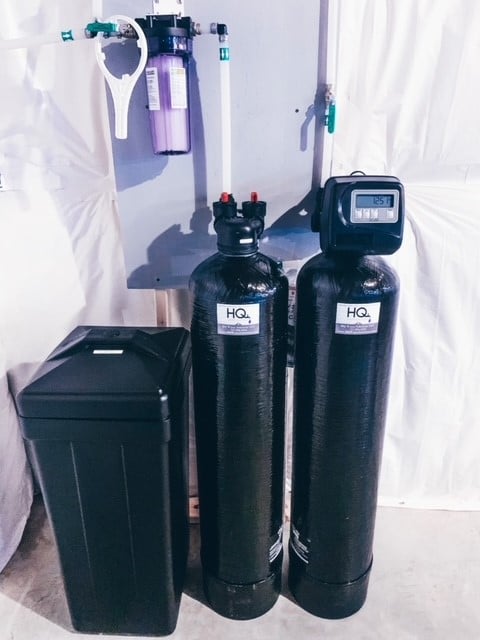
Installing a water softener is not a one-size-fits-all job. The right size depends on your water hardness, how many people live in your home, and how much water you use. A system that’s too small will struggle to keep up, and one that’s too large wastes salt and water.
Most installations connect the softener to your main water line so every faucet, shower, and appliance gets softened water. The unit also needs a nearby drain for regeneration and a power outlet. You can read more about the process in our guide to water softener installation.
Hard Water in South Central PA
Pennsylvania’s limestone-rich geology means many homes in our area, especially those on well water, deal with hard water. Water between 7 and 10.5 gpg is considered hard by the U.S. Geological Survey, and anything above 10.5 gpg is very hard.
Our technicians test water in homes across the region every week, and hardness in the 10 to 20 gpg range is what we encounter most often. At that level, you’ll typically notice scale buildup on faucets and showerheads, spotty dishes, dry skin, and appliances that wear out faster than they should.
The cause is geology. Pennsylvania’s limestone-rich bedrock dissolves calcium and magnesium into groundwater as it moves through the rock, so homes here, especially those on private wells, tend to see higher mineral levels than much of the country.
Whether you’re on a private well or public water, hardness can vary from one property to the next, even on the same street. A water test tells you exactly what you’re dealing with, so any treatment you choose is sized correctly rather than guessed at. If you’re on a well, see our guide to water softeners for well water for what to consider.
What Our Technicians See Most
One of the biggest things homeowners notice after installing a water softener is how much better their skin and hair feel. Less dry skin and softer hair are usually some of the first things people mention. They also find themselves using less soap, shampoo, hair products, and laundry detergent.
Here is what Stephen, Owner of HQ Water Solutions, has to say: “You’ll notice cleaner dishes and glasses with fewer water spots. Less soap scum in the dishwasher, washing machine, and bathrooms. Faucets and showerheads won’t build up with scale as they did before. What you don’t see is just as important. A water softener helps protect your water heater from scale buildup, which can improve efficiency and help prevent costly repairs or premature leaks.”
Water Softener Benefits FAQs
What are the main benefits of a water softener?
The biggest benefits are lower soap and detergent use, softer-feeling skin and hair, longer-lasting appliances, less scale buildup, softer laundry, and easier cleaning.
Will a water softener lower my water bill?
A softener won’t change how much water you use. It can lower your overall household costs by reducing soap and detergent use and by helping appliances last longer.
Is softened water safe to drink?
Yes, for most people. Salt-based softeners add a small amount of sodium. If you’re on a low-sodium diet, check with your doctor, or consider a reverse osmosis system for drinking water.
Do I need a water softener if I have well water?
Well water is often high in minerals, so a softener can be a good fit. Testing first is key, since well water may also contain iron or other contaminants that need separate treatment.
How long does a water softener last?
With proper maintenance, 20 to 30 years or more.
How often do I need to add salt?
It depends on your water usage, your softener’s size, and your water’s hardness. Most homes add salt every few months.
Curious Where Your Water Stands?
If you’ve read this far and recognized your own showerhead, the next step is simple: find out what’s in your water. Reach out to HQ Water Solutions to schedule a free water test and talk through what the results mean for your home.